
California Department of Education Logo

Altamont Creek Elementary School

This page contains information on Altamont Elementary School the 2022 Green Ribbon Selectee.
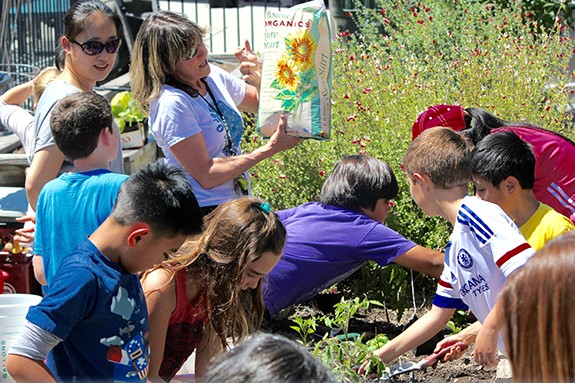
Picture of science teacher and students planting in the garden.

Altamont Creek Elementary systematically integrates sustainability into the curriculum, focusing on improving health and wellness, reducing waste, and empowering the community as problem solvers and part of the solution. In 2017, Altamont Creek created a model solid waste program to reduce waste and increase food recovery and donation. Students collected data about how much food was being shared during the lunch period by tallying and categorizing how many items were put on and taken from the lunchroom share table. The school collected and donated unwanted food from the share table and surplus food from the kitchen to a local food pantry. In the 2019–20 school year, Altamont Creek rescued 2,632 pounds of surplus food. The school’s science curriculum teaches students about agriculture through hands-on activities in the two outdoor garden instruction areas. In addition, all first through fifth-grade students at Altamont Creek receive instructional time in the school’s garden accompanied by California Next Generation Science Standards-aligned lessons taught in their classroom or the school's science lab. The school’s science teacher extends garden lessons to integrate environmental concepts and create place-based investigations.

Application External link opens in new window or tab. (PDF)

Questions:   California Green Ribbon Schools | GREENRIBBONSCHOOLS@cde.ca.gov | 916-322-2470
Last Reviewed: Wednesday, May 28, 2025
Recently Posted in School Facilities
  • The Guide to Long-Range Facilities Master Plans (updated 10-Nov-2026)
    The Guide to Long-Range Facilities Master Plans (LRFMP) was revised in 2026, with updated guidance on master planning for local educational agencies and Proposition 2 requirements for school districts applying for School Facility Program Funding.
  • Key Components of a Facilities Master Plan (added 10-Nov-2026)
    The elements of a typical facilities master plan (FMP) and guidance on what to include, how to organize the information, and why it matters, from the Guide to Long-Range Facilities Master Plans.
  • Conclusion (added 10-Nov-2026)
    A summary on master plans as living documents that reflect thoughtful educational goals and future planning, from the Guide to Long-Range Facilities Master Plans.
  • Education Programs with Specialized Facility Needs (added 10-Nov-2026)
    The importance of including specialized facilities in facilities master plans to meet the needs of educational programs and students with disabilities, from the Guide to Long-Range Facilities Master Plans.
  • Additional Considerations and Planning the Future (added 10-Nov-2026)
    Integrating sustainability, safety, accessibility, and climate resiliency into every stage of facilities master planning, from the Guide to Long-Range Facilities Master Plans.

  • Appendix A (added 10-Nov-2026)
    A table of Facilities Master Plan Elements vs. Proposition 2 Requirements, from the Guide to Long-Range Facilities Master Plans.
  • Appendix B (added 10-Nov-2026)
    A summary of additional required elements per Proposition 2, from the Guide to Long- Range Facilities Master Plans.
  • Facilities Master Planning Resources (added 10-Nov-2026)
    Additional resources, facilities master plan (FMP) exemplars, and links to the Office of Public School Construction (OPSC) Guidelines for the Five-Year School Facilities Master Plan, from the Guide to Long-Range Facilities Master Plans.
  • Introduction (added 10-Nov-2026)
    An introduction of the Guide to Long-Range Facilities Master Plans.
  • Facilities Master Planning Process (added 10-Nov-2026)
    Best practices for launching a facilities master planning (FMP) effort, engaging stakeholders, and long-term planning, from the Guide to Long-Range Facilities Master Plans.