
California Department of Education Logo

Creston Elementary School

This page contains information on Creston Elementary School as one of the 2020 green ribbon schools award selectee.
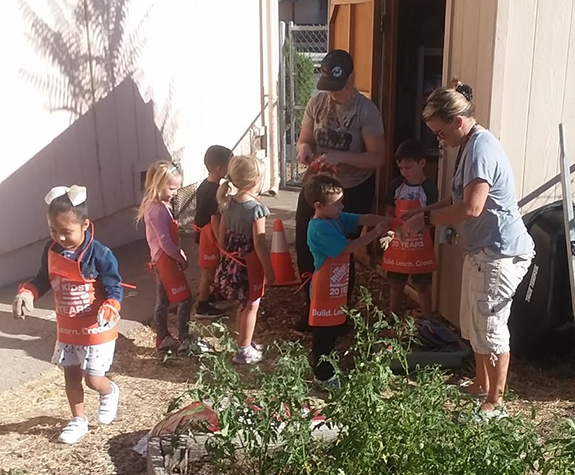
Picture of Creston Elementary School 2020 Green Ribbon Schools award selectee

Creston Elementary School is creating a lasting difference for the world, teaching students who think about their resource use at school, at home, and out in their community. Creston Elementary staff created its own energy conservation plan to manage and reduce energy consumption. The school has removed waste bins from classrooms; only recycle bins are available for student and staff use in the classrooms. Creston staff decided to use chips from a downed tree as mulch to use around the school’s gardens. The school collects rainwater in five rain barrels around the site that students use to water the garden and planter beds. Creston utilizes approximately 90 percent of its school grounds as learning areas for students, including a main garden, a “kinder-garden,” a music garden, and a sensory garden.

Completed Application External link opens in new window or tab. (PDF) for Creston Elementary School.

Questions:   California Green Ribbon Schools | GREENRIBBONSCHOOLS@cde.ca.gov | 916-322-2470
Last Reviewed: Wednesday, May 28, 2025
Recently Posted in School Facilities
  • The Guide to Long-Range Facilities Master Plans (updated 10-Nov-2026)
    The Guide to Long-Range Facilities Master Plans (LRFMP) was revised in 2026, with updated guidance on master planning for local educational agencies and Proposition 2 requirements for school districts applying for School Facility Program Funding.
  • Key Components of a Facilities Master Plan (added 10-Nov-2026)
    The elements of a typical facilities master plan (FMP) and guidance on what to include, how to organize the information, and why it matters, from the Guide to Long-Range Facilities Master Plans.
  • Conclusion (added 10-Nov-2026)
    A summary on master plans as living documents that reflect thoughtful educational goals and future planning, from the Guide to Long-Range Facilities Master Plans.
  • Education Programs with Specialized Facility Needs (added 10-Nov-2026)
    The importance of including specialized facilities in facilities master plans to meet the needs of educational programs and students with disabilities, from the Guide to Long-Range Facilities Master Plans.
  • Additional Considerations and Planning the Future (added 10-Nov-2026)
    Integrating sustainability, safety, accessibility, and climate resiliency into every stage of facilities master planning, from the Guide to Long-Range Facilities Master Plans.

  • Appendix A (added 10-Nov-2026)
    A table of Facilities Master Plan Elements vs. Proposition 2 Requirements, from the Guide to Long-Range Facilities Master Plans.
  • Appendix B (added 10-Nov-2026)
    A summary of additional required elements per Proposition 2, from the Guide to Long- Range Facilities Master Plans.
  • Facilities Master Planning Resources (added 10-Nov-2026)
    Additional resources, facilities master plan (FMP) exemplars, and links to the Office of Public School Construction (OPSC) Guidelines for the Five-Year School Facilities Master Plan, from the Guide to Long-Range Facilities Master Plans.
  • Introduction (added 10-Nov-2026)
    An introduction of the Guide to Long-Range Facilities Master Plans.
  • Facilities Master Planning Process (added 10-Nov-2026)
    Best practices for launching a facilities master planning (FMP) effort, engaging stakeholders, and long-term planning, from the Guide to Long-Range Facilities Master Plans.