
California Department of Education Logo

Edison Elementary School

This page contains information on Edison Elementary School as one of the 2020 green ribbon schools selectee.
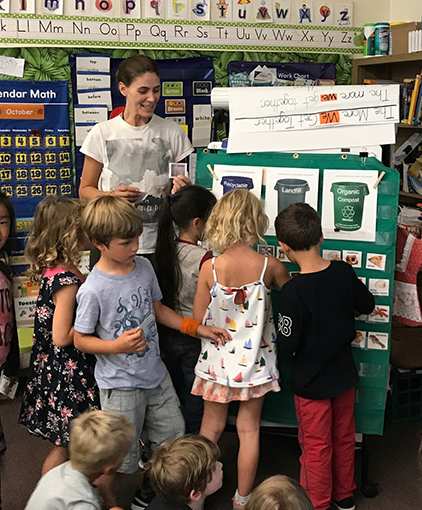
Picture of Edison Elementary School 2020 Green Ribbon Schools award selectee

Edison Elementary School has been leading its community and district in efforts to become more environmentally focused since 2000. In 2008, Edison was the first school in Alameda Unified School District to implement a fresh salad bar, and influenced other schools to follow. Between the years of 2009 and 2018, Edison documented a 41 percent decrease in greenhouse gas emissions. The school began monitoring waste service levels in 2013 and demonstrates an 80 percent diversion rate. Edison has an edible garden containing fruit trees, herbs, and vegetables, with a designated space for instruction. Student letter campaigns from 2015 to 2019 to City of Alameda officials and local businesses have influenced local decision making, including the implementation of three-stream recycling bins in downtown areas, the creation of the City of Alameda’s “Straws on Request,” and a compostable foodware ordinance for restaurants. Edison is motivated to continue to take its environmental and sustainability stewardship to new innovative levels in the coming years.

Completed Application External link opens in new window or tab. (PDF) for Edison Elementary School.

Questions:   California Green Ribbon Schools | GREENRIBBONSCHOOLS@cde.ca.gov | 916-322-2470
Last Reviewed: Wednesday, May 28, 2025
Recently Posted in School Facilities
  • The Guide to Long-Range Facilities Master Plans (updated 10-Nov-2026)
    The Guide to Long-Range Facilities Master Plans (LRFMP) was revised in 2026, with updated guidance on master planning for local educational agencies and Proposition 2 requirements for school districts applying for School Facility Program Funding.
  • Key Components of a Facilities Master Plan (added 10-Nov-2026)
    The elements of a typical facilities master plan (FMP) and guidance on what to include, how to organize the information, and why it matters, from the Guide to Long-Range Facilities Master Plans.
  • Conclusion (added 10-Nov-2026)
    A summary on master plans as living documents that reflect thoughtful educational goals and future planning, from the Guide to Long-Range Facilities Master Plans.
  • Education Programs with Specialized Facility Needs (added 10-Nov-2026)
    The importance of including specialized facilities in facilities master plans to meet the needs of educational programs and students with disabilities, from the Guide to Long-Range Facilities Master Plans.
  • Additional Considerations and Planning the Future (added 10-Nov-2026)
    Integrating sustainability, safety, accessibility, and climate resiliency into every stage of facilities master planning, from the Guide to Long-Range Facilities Master Plans.

  • Appendix A (added 10-Nov-2026)
    A table of Facilities Master Plan Elements vs. Proposition 2 Requirements, from the Guide to Long-Range Facilities Master Plans.
  • Appendix B (added 10-Nov-2026)
    A summary of additional required elements per Proposition 2, from the Guide to Long- Range Facilities Master Plans.
  • Facilities Master Planning Resources (added 10-Nov-2026)
    Additional resources, facilities master plan (FMP) exemplars, and links to the Office of Public School Construction (OPSC) Guidelines for the Five-Year School Facilities Master Plan, from the Guide to Long-Range Facilities Master Plans.
  • Introduction (added 10-Nov-2026)
    An introduction of the Guide to Long-Range Facilities Master Plans.
  • Facilities Master Planning Process (added 10-Nov-2026)
    Best practices for launching a facilities master planning (FMP) effort, engaging stakeholders, and long-term planning, from the Guide to Long-Range Facilities Master Plans.