
California Department of Education Logo

Lycee Francais de San Francisco (LFSF)


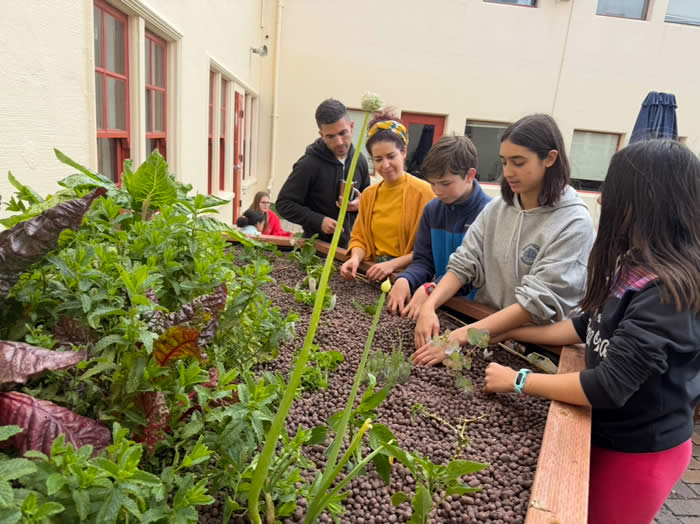
Students participating in planting at their school patio.

Lycée Français de San Francisco (Lycée) exemplifies a deeply rooted, mission-driven commitment to environmental sustainability, whole-child well-being, and community partnership across its three diverse campuses. Distinct not by wealth but by decades of intentional practice, the Lycée has integrated sustainability into its identity, curriculum, and operations since the 1960s, blending French educational values with Northern California’s rich ecosystems. From preschool through grade 12, students engage in hands-on learning experiences that explore ecology, STEAM, biodiversity, wellness, and climate citizenship across urban, coastal, and bayside settings, learning to view sustainability as both a scientific and civic responsibility. This work is strengthened through community collaboration, including the student-led Eco-Delegate program, partnerships with local and international organizations, and strong family and donor engagement, all of which support renewable energy, waste reduction, and environmental education initiatives. Guided by its 2025-2030 Strategic Plan, the Lycée sustains long-term impact through investments in renewable energy, water-wise landscapes, efficient facilities, green transportation, and wellness-centered design, positioning the school as a model for holistic, enduring environmental excellence and the development of globally minded, environmentally literate citizens.

Questions:   George Garcia | GREENRIBBONSCHOOLS@cde.ca.gov | 916-322-2470
Last Reviewed: Wednesday, February 11, 2026
Recently Posted in School Facilities
  • The Guide to Long-Range Facilities Master Plans (updated 10-Nov-2026)
    The Guide to Long-Range Facilities Master Plans (LRFMP) was revised in 2026, with updated guidance on master planning for local educational agencies and Proposition 2 requirements for school districts applying for School Facility Program Funding.
  • Key Components of a Facilities Master Plan (added 10-Nov-2026)
    The elements of a typical facilities master plan (FMP) and guidance on what to include, how to organize the information, and why it matters, from the Guide to Long-Range Facilities Master Plans.
  • Conclusion (added 10-Nov-2026)
    A summary on master plans as living documents that reflect thoughtful educational goals and future planning, from the Guide to Long-Range Facilities Master Plans.
  • Education Programs with Specialized Facility Needs (added 10-Nov-2026)
    The importance of including specialized facilities in facilities master plans to meet the needs of educational programs and students with disabilities, from the Guide to Long-Range Facilities Master Plans.
  • Additional Considerations and Planning the Future (added 10-Nov-2026)
    Integrating sustainability, safety, accessibility, and climate resiliency into every stage of facilities master planning, from the Guide to Long-Range Facilities Master Plans.

  • Appendix A (added 10-Nov-2026)
    A table of Facilities Master Plan Elements vs. Proposition 2 Requirements, from the Guide to Long-Range Facilities Master Plans.
  • Appendix B (added 10-Nov-2026)
    A summary of additional required elements per Proposition 2, from the Guide to Long- Range Facilities Master Plans.
  • Facilities Master Planning Resources (added 10-Nov-2026)
    Additional resources, facilities master plan (FMP) exemplars, and links to the Office of Public School Construction (OPSC) Guidelines for the Five-Year School Facilities Master Plan, from the Guide to Long-Range Facilities Master Plans.
  • Introduction (added 10-Nov-2026)
    An introduction of the Guide to Long-Range Facilities Master Plans.
  • Facilities Master Planning Process (added 10-Nov-2026)
    Best practices for launching a facilities master planning (FMP) effort, engaging stakeholders, and long-term planning, from the Guide to Long-Range Facilities Master Plans.