
California Department of Education Logo

Captain Leland F. Norton Elementary


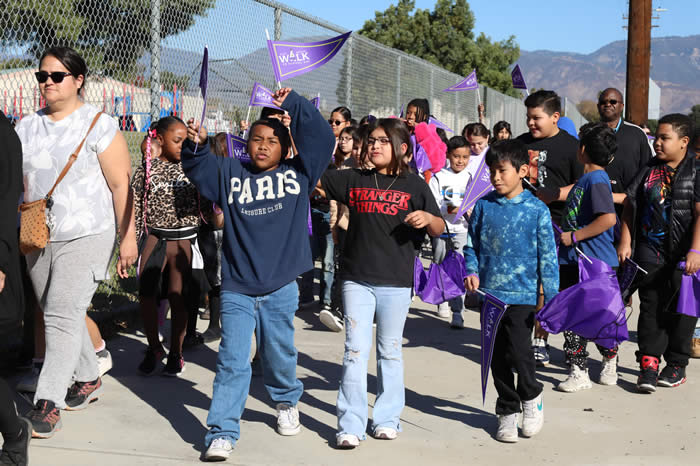
Students, parents and teachers participated in a walk around the school day.

Captain Leland F. Norton Elementary School (Norton ES) in San Bernardino, California, exemplifies excellence in environmental stewardship and sustainability in a community facing significant socioeconomic and environmental challenges. Serving a student population that is nearly 100% economically disadvantaged, Norton ES stands out not for wealth, but for its innovative, hands-on STEM curriculum and its commitment to fostering environmentally literate, community-minded leaders from preschool through sixth grade. The school’s success is rooted in extensive collaboration among staff, students, families, and community partners, including the district’s Facilities Planning and Development Department and sustainability partner Cenergistic, as well as participation in programs such as the Whole-Earth Program. Through project-based learning, energy conservation initiatives, recycling, water-saving practices, and wellness- focused programs, Norton ES instills a culture of responsibility, health, and environmental awareness that extends beyond the classroom. By integrating sustainability into daily operations, student learning, and community engagement, Norton ES not only equips students with the knowledge and skills to protect and improve their environment but also ensures long- term, meaningful impact on the school and its surrounding community, serving as a model of resilience, collaboration, and enduring environmental stewardship.

Questions:   George Garcia | GREENRIBBONSCHOOLS@cde.ca.gov | 916-322-2470
Last Reviewed: Wednesday, February 11, 2026
Recently Posted in School Facilities
  • The Guide to Long-Range Facilities Master Plans (updated 10-Nov-2026)
    The Guide to Long-Range Facilities Master Plans (LRFMP) was revised in 2026, with updated guidance on master planning for local educational agencies and Proposition 2 requirements for school districts applying for School Facility Program Funding.
  • Key Components of a Facilities Master Plan (added 10-Nov-2026)
    The elements of a typical facilities master plan (FMP) and guidance on what to include, how to organize the information, and why it matters, from the Guide to Long-Range Facilities Master Plans.
  • Conclusion (added 10-Nov-2026)
    A summary on master plans as living documents that reflect thoughtful educational goals and future planning, from the Guide to Long-Range Facilities Master Plans.
  • Education Programs with Specialized Facility Needs (added 10-Nov-2026)
    The importance of including specialized facilities in facilities master plans to meet the needs of educational programs and students with disabilities, from the Guide to Long-Range Facilities Master Plans.
  • Additional Considerations and Planning the Future (added 10-Nov-2026)
    Integrating sustainability, safety, accessibility, and climate resiliency into every stage of facilities master planning, from the Guide to Long-Range Facilities Master Plans.

  • Appendix A (added 10-Nov-2026)
    A table of Facilities Master Plan Elements vs. Proposition 2 Requirements, from the Guide to Long-Range Facilities Master Plans.
  • Appendix B (added 10-Nov-2026)
    A summary of additional required elements per Proposition 2, from the Guide to Long- Range Facilities Master Plans.
  • Facilities Master Planning Resources (added 10-Nov-2026)
    Additional resources, facilities master plan (FMP) exemplars, and links to the Office of Public School Construction (OPSC) Guidelines for the Five-Year School Facilities Master Plan, from the Guide to Long-Range Facilities Master Plans.
  • Introduction (added 10-Nov-2026)
    An introduction of the Guide to Long-Range Facilities Master Plans.
  • Facilities Master Planning Process (added 10-Nov-2026)
    Best practices for launching a facilities master planning (FMP) effort, engaging stakeholders, and long-term planning, from the Guide to Long-Range Facilities Master Plans.