
California Department of Education Logo

Ravenswood City School District


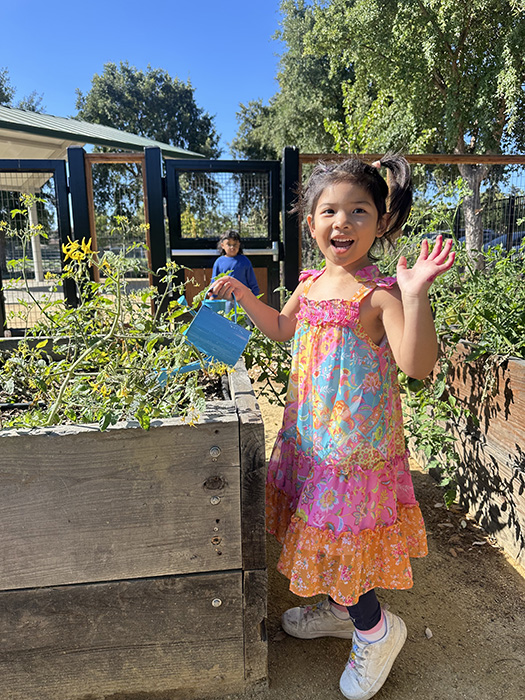
A student participating in watering plants at their school garden area.

Ravenswood City School District (Ravenswood) demonstrates that sustainability leadership is driven by equity and vision, not wealth. Serving a community where 90% of students are low-income and 56% are English learners, the district uses sustainability as a tool for health, resilience, and opportunity despite limited funding and staffing challenges. Through a decade-long Facilities Master Plan and more than $250 million in modernization investments, Ravenswood has electrified campuses, expanded solar energy, reduced water use, planted over 1,300 trees, improved air quality, and created green schoolyards and outdoor learning spaces that integrate environmental literacy into daily instruction. These efforts are strengthened by deep partnerships with energy, environmental, civic, higher-education, and wellness organizations, ensuring a holistic, community-centered approach to climate action, student well-being, and environmental justice. Together, these initiatives position Ravenswood as a model for long-term, equitable, and climate-resilient transformation in an under-resourced school district.

Questions:   George Garcia | GREENRIBBONSCHOOLS@cde.ca.gov | 916-322-2470
Last Reviewed: Wednesday, February 11, 2026
Recently Posted in School Facilities
  • The Guide to Long-Range Facilities Master Plans (updated 10-Nov-2026)
    The Guide to Long-Range Facilities Master Plans (LRFMP) was revised in 2026, with updated guidance on master planning for local educational agencies and Proposition 2 requirements for school districts applying for School Facility Program Funding.
  • Key Components of a Facilities Master Plan (added 10-Nov-2026)
    The elements of a typical facilities master plan (FMP) and guidance on what to include, how to organize the information, and why it matters, from the Guide to Long-Range Facilities Master Plans.
  • Conclusion (added 10-Nov-2026)
    A summary on master plans as living documents that reflect thoughtful educational goals and future planning, from the Guide to Long-Range Facilities Master Plans.
  • Education Programs with Specialized Facility Needs (added 10-Nov-2026)
    The importance of including specialized facilities in facilities master plans to meet the needs of educational programs and students with disabilities, from the Guide to Long-Range Facilities Master Plans.
  • Additional Considerations and Planning the Future (added 10-Nov-2026)
    Integrating sustainability, safety, accessibility, and climate resiliency into every stage of facilities master planning, from the Guide to Long-Range Facilities Master Plans.

  • Appendix A (added 10-Nov-2026)
    A table of Facilities Master Plan Elements vs. Proposition 2 Requirements, from the Guide to Long-Range Facilities Master Plans.
  • Appendix B (added 10-Nov-2026)
    A summary of additional required elements per Proposition 2, from the Guide to Long- Range Facilities Master Plans.
  • Facilities Master Planning Resources (added 10-Nov-2026)
    Additional resources, facilities master plan (FMP) exemplars, and links to the Office of Public School Construction (OPSC) Guidelines for the Five-Year School Facilities Master Plan, from the Guide to Long-Range Facilities Master Plans.
  • Introduction (added 10-Nov-2026)
    An introduction of the Guide to Long-Range Facilities Master Plans.
  • Facilities Master Planning Process (added 10-Nov-2026)
    Best practices for launching a facilities master planning (FMP) effort, engaging stakeholders, and long-term planning, from the Guide to Long-Range Facilities Master Plans.