
Recipe for Chicken Caesar Salad
Classic chicken Caesar salad recipe with grilled chicken breast and freshly chopped vegetables developed by the California Culinary Centers for school food service menu planning.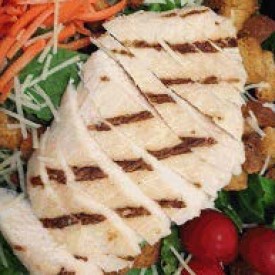
For more recipes visit the CA Culinary Centers Standardized Recipes web page.
Yields 50 Servings
This recipe yields 50–9 ounce chicken Caesar salads servings in 32 ounce individual salad containers or bowls.
Ingredients
Ingredients list includes measure by weight or volume. Choose one measure, either weight or volume, for the ingredient. Weight is listed first in bold.
- 9 pounds and 6 ounces or 50–3 ounce as purchased (AP), frozen, fully cooked, chicken breast
- 12 pounds and 12 ounces or 6 gallons and 1 quart ready to use, romaine lettuce, chopped
- 3 pounds and 2 ounces parmesan cheese, shredded
- 1 pound and 10 ounces or 1 quart and 2¼ cups ready to use, fresh carrots, shredded
- 5 pounds and 8 ounces or 150 AP, fresh cherry or grape tomatoes, whole
- 50–2 ounce packets of Caesar dressing
- 100–1 ounce packets of whole grain-rich croutons
Directions
To Prepare Chicken
- Thaw ready to use chicken in refrigerator one day in advance of assembly of salad. Critical Control Point (CCP): Thaw chicken in refrigerator at 41°F or lower.
- Slice each chilled chicken breast into ¼ inch strips. Set aside one sliced chicken breast for each salad.
To Assemble Salad
- Place 2 cups of chopped ready to use romaine lettuce into one individual 32 ounce serving container or bowl.
- Top lettuce with one–3 ounce sliced chicken breast.
- Sprinkle ¼ cup or one number 16 scoop of shredded parmesan cheese on top of the lettuce.
- Place 2 tablespoons or one number 30 scoop of shredded carrots in one corner of the bowl.
- Rinse tomatoes under room temperature running water. Slice each tomato into quarters.
- Place 12 quarters of cherry tomatoes in corner diagonally across from the carrots in bowl.
- Add one–2 ounce salad dressing packet and two–1 ounce crouton packets with each salad.
- Seal the salad containers and serve immediately or hold in the refrigerator at 41°F or lower. CCP: Hold salad containers in refrigerator at 41°F or lower.
- Serve one–9 ounce chicken Caesar salad for each serving.
Nutritional Analysis
- Calories, in K calories: 600
Carbohydrates, in grams: 36.02
Protein, in grams: 38.32
Saturated fat, in grams: 8.46
Trans fat, in grams: 0
Total fat, in grams: 32.57
Sodium, in milligrams: 1,522.00
Recipe Options
The CA Culinary Centers have calculated and tested the yields for this standardized recipe. You may choose to vary the spices in the recipe to meet the taste preferences of your students. For example, using a 1.5 to 2 ratio for spices when doubling the recipe yield from 50 to 100. However, changing or substituting any other ingredients may result in a different yield, meal contribution, or dietary specification, and should be considered a different recipe. To learn more about how to standardize your recipe visit the CA Culinary Centers Standardized Recipes web page Resources tab.
Yields 100 Servings
This recipe yields 100–9 ounce chicken Caesar salads servings in 32 ounce individual salad containers or bowls.
Ingredients
Ingredients list includes measure by weight or volume. Choose one measure, either weight or volume, for the ingredient. Weight is listed first in bold.
- 18 pounds and 12 ounces or 100–3 ounce as purchased (AP), frozen, fully cooked, chicken breast
- 25 pounds and 8 ounces or 12 gallons and 2 quarts ready to use, romaine lettuce, chopped
- 6 pounds and 4 ounces parmesan cheese, shredded
- 3 pounds and 4 ounces or 3 quarts and ½ cups ready to use, fresh carrots, shredded
- 11 pounds or 300 AP, fresh cherry or grape tomatoes, whole
- 100–2 ounce packets of Caesar dressing
- 200–1 ounce packets of whole grain-rich croutons
Directions
To Prepare Chicken
- Thaw ready to use chicken in refrigerator one day in advance of assembly of salad. Critical Control Point (CCP): Thaw chicken in refrigerator at 41°F or lower.
- Slice each chilled chicken breast into ¼ inch strips. Set aside one sliced chicken breast for each salad.
To Assemble Salad
- Place 2 cups of chopped ready to use romaine lettuce into one individual 32 ounce serving container or bowl.
- Top lettuce with one–3 ounce sliced chicken breast.
- Sprinkle ¼ cup or one number 16 scoop of shredded parmesan cheese on top of the lettuce.
- Place 2 tablespoons or one number 30 scoop of shredded carrots in one corner of the bowl.
- Rinse tomatoes under room temperature running water. Slice each tomato into quarters.
- Place 12 quarters of cherry tomatoes in corner diagonally across from the carrots in bowl.
- Add one–2 ounce salad dressing packet and two–1 ounce crouton packets with each salad.
- Seal the salad containers and serve immediately or hold in the refrigerator at 41°F or lower. CCP: Hold salad containers in refrigerator at 41°F or lower.
- Serve one–9 ounce chicken Caesar salad for each serving.
Nutritional Analysis
- Calories, in K calories: 600
Carbohydrates, in grams: 36.02
Protein, in grams: 38.32
Saturated fat, in grams: 8.46
Trans fat, in grams: 0
Total fat, in grams: 32.57
Sodium, in milligrams: 1,522.00
Recipe Options
The CA Culinary Centers have calculated and tested the yields for this standardized recipe. You may choose to vary the spices in the recipe to meet the taste preferences of your students. For example, using a 1.5 to 2 ratio for spices when doubling the recipe yield from 50 to 100. However, changing or substituting any other ingredients may result in a different yield, meal contribution, or dietary specification, and should be considered a different recipe. To learn more about how to standardize your recipe visit the CA Culinary Centers Standardized Recipes web page Resources tab.
General Recipe Information
Category
- Salad recipes
- Recipes with condiments
Serving Suggestion
- Yield 50 or yield 100–9 ounce chicken Caesar salads in 32 ounce individual salad containers or bowls.
Contribution to Meal Pattern
The contribution to the meal pattern for this recipe is based on the suggested serving size above.
- 3.5 ounce equivalents meat/meat alternative
- 2.5 ounce equivalents whole grain-rich
- 1⅜ cups of vegetables (1 cup dark green and ⅜ cup red orange vegetables)
If you decide to modify this recipe or serving size, you may use the tools available on the CA Culinary Centers Standardized Recipes web page Resources tab to create your own standardized recipe or find the contribution to the meal pattern.
U.S. Department of Agriculture Food Items
- None
Recipe Roots (Flavor Profile)
- American Classic
Preparation Time
- Preparation to serve: 60 minutes for 50 servings or 90 minutes for 100 servings
Critical Control Point (CCP)
- CCP: Thaw chicken in refrigerator at 41°F or lower.
- CCP: Hold salad containers in refrigerator at 41°F or lower.
Kid Rating

Culinary Center
Clovis Unified School District